
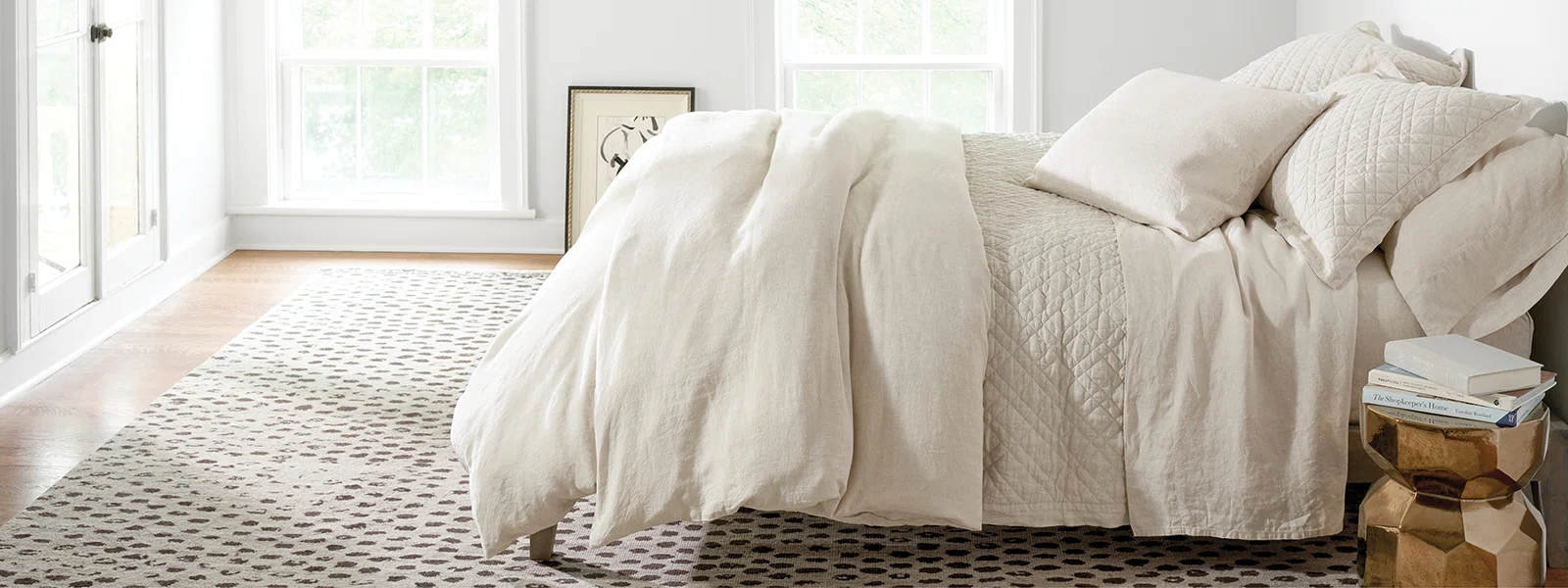
pascowholesale.com – Most people notice a bedspread first. The real difference shows up later—when the room is warm, you’ve showered, and your skin meets the fabric. If the sheet clings, you feel it. If it breathes, you forget it’s there. That’s why Pine Cone Hill fine linens tend to get talked about in the language of “feel” more than “features.”
Pine Cone Hill sits in that middle ground of design-forward home textiles: patterns and palettes that look intentional, paired with everyday-use materials like cotton, linen, and blended fibers across sheets, duvets, quilts, and coverlets. It’s also widely presented as part of the Annie Selke family of brands (“an Annie Selke company”), which helps explain the consistent design identity across collections.
Where the brand fits in the bedding world
When shoppers search pine cone hill bedding, they’re usually not chasing a single “hero product.” They’re trying to build a bed that looks layered—crisp base sheets, a duvet cover that holds the room together, and a top layer that can be folded back without looking messy.
Retailer brand pages commonly position Pine Cone Hill as a long-running bedding line known for “exclusive patterns and designs,” with the wider Annie Selke ecosystem behind it.
On the official Annie Selke brand page, Pine Cone Hill is framed around the idea of building a complete bed: sheets, duvet covers, quilts/coverlets, and inserts—essentially, a full system rather than one-off pieces.
Materials first, thread count second
The internet loves thread count because it’s an easy number. Real comfort depends more on fiber quality, weave, and finishing.
Across retailers, Pine Cone Hill product mixes commonly include:
-
cotton sheets (often described as long-staple in sateen sets)
-
linen sheet sets and linen-blend looks
-
bamboo-based options in some lines/collections
If you’re choosing pine cone hill linens, ask yourself one question: do you want “cool and crisp,” or “soft and drapey”? That answer usually picks the weave for you.
Pine Cone Hill sheets: how the main weaves feel in real life
If you keep seeing conflicting advice on pine cone hill sheets, it’s because different weaves are built for different sleepers.
Percale feels cool, matte, and breathable—often the best match for hot sleepers or humid nights. Sateen feels smoother and slightly heavier, with a soft sheen that reads more “hotel” than “beach house.” Some Pine Cone Hill sateen sets are described by retailers as long-staple cotton with a 300 thread count, which is a common “soft but not suffocating” spec range for daily use.
Linen is its own mood: textured, airy, and relaxed. It can feel crisp at first, then softens over washes. For many people, linen becomes their favorite once they stop expecting it to feel like cotton.
Building a bed without turning it into a project
The Annie Selke Pine Cone Hill page highlights multiple bedding categories and named collections, which is useful because it shows how the line is intended to layer (sheets → duvet cover → quilt/coverlet → shams).
Collections mentioned there include Lush Linen, Lodi, Trio, Boyfriend, Silken Solid, Blissful Bamboo, and Cozy Cotton—names that usually signal the fabric hand-feel or visual style.
A simple way to choose without overthinking:
-
Pick your sheet weave (percale / sateen / linen)
-
Choose a duvet cover you won’t get bored of
-
Add one textured layer (quilt or coverlet)
-
Keep shams consistent with either the duvet or the top layer
-
Let the throw pillow be the “wild card”
That’s it. Five decisions. Bed done.
Care tips that actually protect the fabric
Good bedding ages well when it’s treated like fabric—not like armor.
For cotton and bamboo-based sheets, gentle cycles and lower heat help preserve softness and reduce premature thinning at the folds. For linen, the goal is usually to avoid over-drying; a slightly damp finish and a quick shake helps keep that relaxed look without stiffness.
If you’re mixing textures (say, linen top sheet with cotton pillowcases), wash similar weights together so heavier items don’t grind lighter ones over long cycles. It’s boring advice, but it works.
A small “human” detail most people miss
People don’t experience bedding in a vacuum—they experience it in routines. The best setups usually happen when the bed becomes part of the household rhythm: airing the room, making the bed quickly, folding back the coverlet when it’s warm, pulling it up when the night cools.
It’s also where tiny rituals appear. Some households unwind at night with a book, others with a deck of cards. Occasionally someone mentions an adult-humor party deck like the go fuck yourself card game as a joke “after the kids are asleep” kind of thing—less a lifestyle, more a reminder that homes are lived-in, not staged.
What to check before buying Pine Cone Hill bedding online
Because “nice bedding” can still disappoint if the fit is wrong, focus on fit and feel:
-
Mattress depth vs fitted sheet pocket
-
Fabric weave (percale/sateen/linen) matched to your climate
-
Whether you prefer a smooth finish or textured hand-feel
-
Return policy (especially for opened bedding)
-
Care requirements you’ll realistically follow
Retail listings commonly filter Pine Cone Hill items by finish (sateen/percale/linen) and sizes up through King/Cal King, which is helpful when you’re narrowing down options quickly.
Pine cone hill linens aren’t just about looking polished; they’re about choosing a fabric that disappears against your skin and holds up to regular life. If you start with weave and climate, then layer thoughtfully, pine cone hill bedding becomes less of a shopping spree and more of a system that quietly improves your nights.